What is email automation? How modern brands send smarter
Published on March 25, 2026/Last edited on March 25, 2026/11 min read
Team Braze
Marketers sent more than 376 billion emails a day in 2025. Most go unread, unopened, or unsubscribed from—and the culprit is rarely the channel itself. The wrong message at the wrong moment fails regardless of how well it's written. The emails that actually move people tend to share one quality: they feel like they arrived just in time.
That's no longer the result of careful manual scheduling. It's automation—and increasingly, decision-driven engagement powered by AI, determining who receives a message, when it goes out, what it says, and whether email is even the right channel at all.
The most proactive teams today have moved well past scheduling drip sequences and hoping for the best. They're automating the decision-making behind every send. This guide covers how modern email automation works, where it fits across the customer lifecycle, and how AI is raising the bar for what's possible when relevance and timing drive every message.
Quick overview:
- Email automation is the process of automatically sending personalized emails based on customer behavior, data triggers, or lifecycle events. Modern email marketing automation platforms use AI to determine the best message, timing, and channel for each customer.
Key Takeaways
- Email automation enables brands to send highly personalized, behavior-driven emails automatically at the right moment, improving engagement and conversion by responding to individual customer actions rather than relying on fixed schedules or generic batch sends.
- Effective email automation spans the entire customer lifecycle—from onboarding and activation to engagement, retention, and re-engagement—delivering relevant, timely messages that feel like personalized responses rather than broadcasts, which leads to better customer experiences and stronger business results.
What is email automation?
Email automation is the process of sending targeted emails automatically, based on specific triggers, actions, or schedules. This allows brands to communicate with customers at the right moment without manual intervention.
Relevance is what makes email automation effective. Triggered emails—sent in response to behavioral signals from something a customer actually did, or a stage they've genuinely reached—drive engagement and conversion in a way manual, scheduled sends rarely can.
How does email automation work?
Email automation works by connecting customer data to a set of rules or AI-driven logic that determines when and what to send. When a customer takes an action—or stops taking one—that signal triggers the appropriate message automatically.
Most email automation programs involve three components working together: the data that captures what a customer does, the logic that decides what should happen next, and the delivery mechanism that sends the right message at the right time. The more sophisticated the logic—particularly when AI is involved—the more precisely each of those decisions can be tailored to the individual.
Why email automation matters
Email automation matters because inboxes are crowded, and subscribers have grown selective. A generic promotional email sent to an entire list might get a handful of opens, but it's just as likely to earn an unsubscribe—or damage the sender reputation behind the scenes.
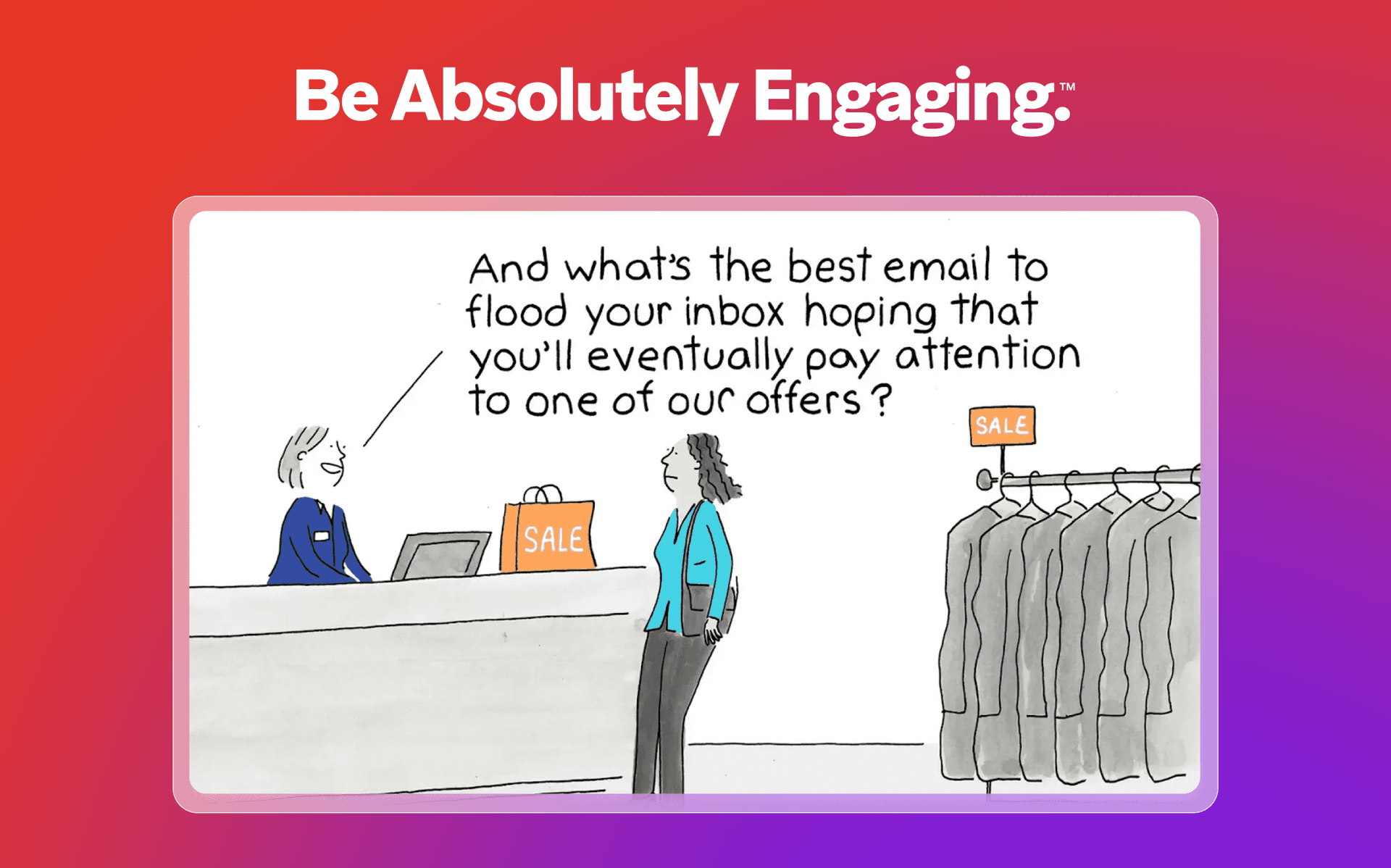
Manual, batch-based campaigns struggle with timing and context. An onboarding sequence that runs on a fixed schedule doesn't know whether a customer has already completed every step. Or it may send out a re-engagement email to someone who has just purchased. The planned messaging continues regardless of what the customer is actually doing.
Expectations have risen to match. Customers are more likely to engage when messages reflect their behavior and where they are in their relationship with a brand. Generic, mistimed email gets ignored at best—and reported as spam at worst.
An email automation strategy is the key to your emails feeling less like broadcasts and more like responses. That's a better experience for the customer—and a more effective one for the brand.
Email marketing automation vs traditional email campaigns
Both traditional campaigns and automated email programs have a place in a strong email automation strategy—but they do very different jobs, and mixing them up leads to programs that underserve both.

Traditional campaigns are planned in advance and sent to a defined audience around a specific moment—a product launch, a seasonal promotion, an announcement. The brand decides when to reach out, and everyone on the list hears from you at roughly the same time. For broad reach and time-sensitive messaging, they work well.
Automated email programs are built around the customer's timeline, not the brand's. A welcome sequence starts when someone signs up. A follow-up goes out when a cart gets abandoned. A check-in fires when a previously active customer goes quiet. The trigger is always something the individual customer did—or stopped doing.
Three things separate the two approaches most clearly:
- Behavior-driven vs. schedule-driven. Automated emails respond to actions and signals. Traditional campaigns run on dates.
- Continuous vs. episodic. Automation runs in the background, always on. Traditional campaigns have a defined start and end.
- Individual vs. segment. Automation responds to individuals based on real-time data. Traditional campaigns typically speak to a broader group with a shared message.
How AI enhances automated email campaigns
Rule-based automation is a meaningful step forward. Setting triggers, building sequences, and responding to defined behaviors gives marketers far more precision than batch sends ever could. But rules have limits. They're static. They can't learn. And they can't account for the full complexity of individual customer behavior at scale.

AI changes the equation in several important ways.
Predicting engagement likelihood
Rather than sending outreach to everyone in a segment and hoping for the best, AI models can assess which individuals are most likely to engage with a given message, at a given time, on a given channel. Thatmoves the logic from "who qualifies for this trigger?" to "who is genuinely likely to respond?"
Optimizing timing and content
Intelligent timing tools analyze each customer's historical behavior to identify when they're most likely to open an email—not just what time zone they're in, but when they're habitually active and engaged. AI-powered content tools take personalization further, selecting or generating message variants most likely to resonate with each individual based on past interactions.
Determining next-best actions
Traditional automation asks what should happen after a trigger fires. AI asks a more useful question: What's the best thing to do for this specific person right now? BrazeAI Decisioning Studio™ uses reinforcement learning to continuously experiment and adapt, optimizing across channel, message, offer, timing, and frequency simultaneously. This level of orchestration goes beyond next-best action to "next best everything."
Reducing reliance on static rules
The more complex a customer journey becomes, the harder it is to maintain a ruleset that stays relevant. AI takes on the constant optimization work—learning from each interaction, updating its models, and replacing the kind of experimentation that would take a human team weeks of A/B testing to reach manually.
Email automation examples
These four brands show what's possible when email automation is built around behavior, data, and smart decisioning.
Stash gets personal from day one and sees 20% deposit conversion
Stash is a personal finance app on a mission to make investing accessible to everyday Americans, starting with as little as $5. Getting a new user to make their first deposit is both the hardest and most important step—and a fixed onboarding sequence wasn't cutting it.
The challenge
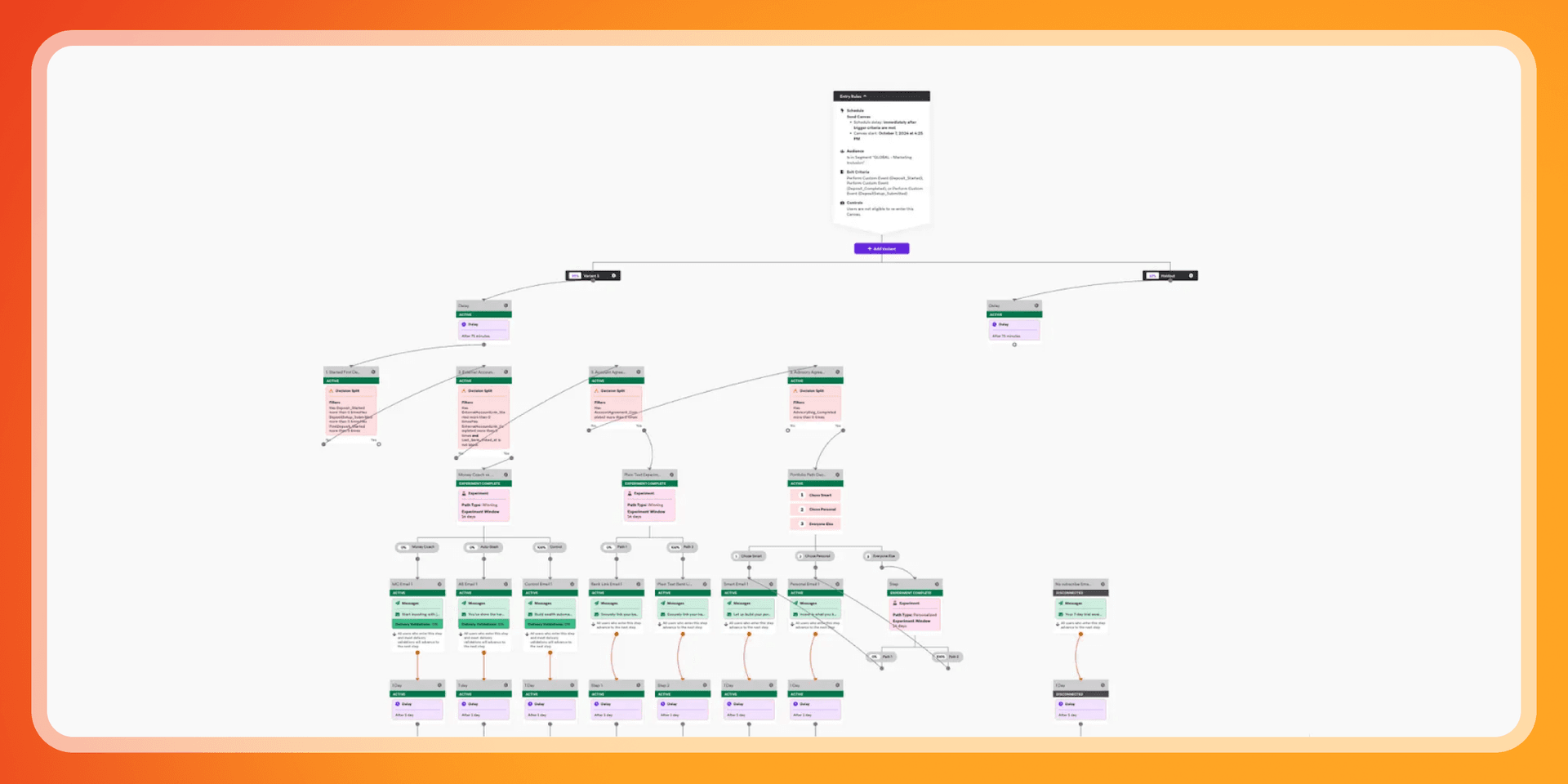
Drop-offs were happening at different points across the onboarding funnel, and a one-size-fits-all email sequence couldn't account for where each individual user actually got stuck. Stash needed a way to respond to each user's specific behavior in real time, not send the same messages to everyone on the same schedule.
The strategy
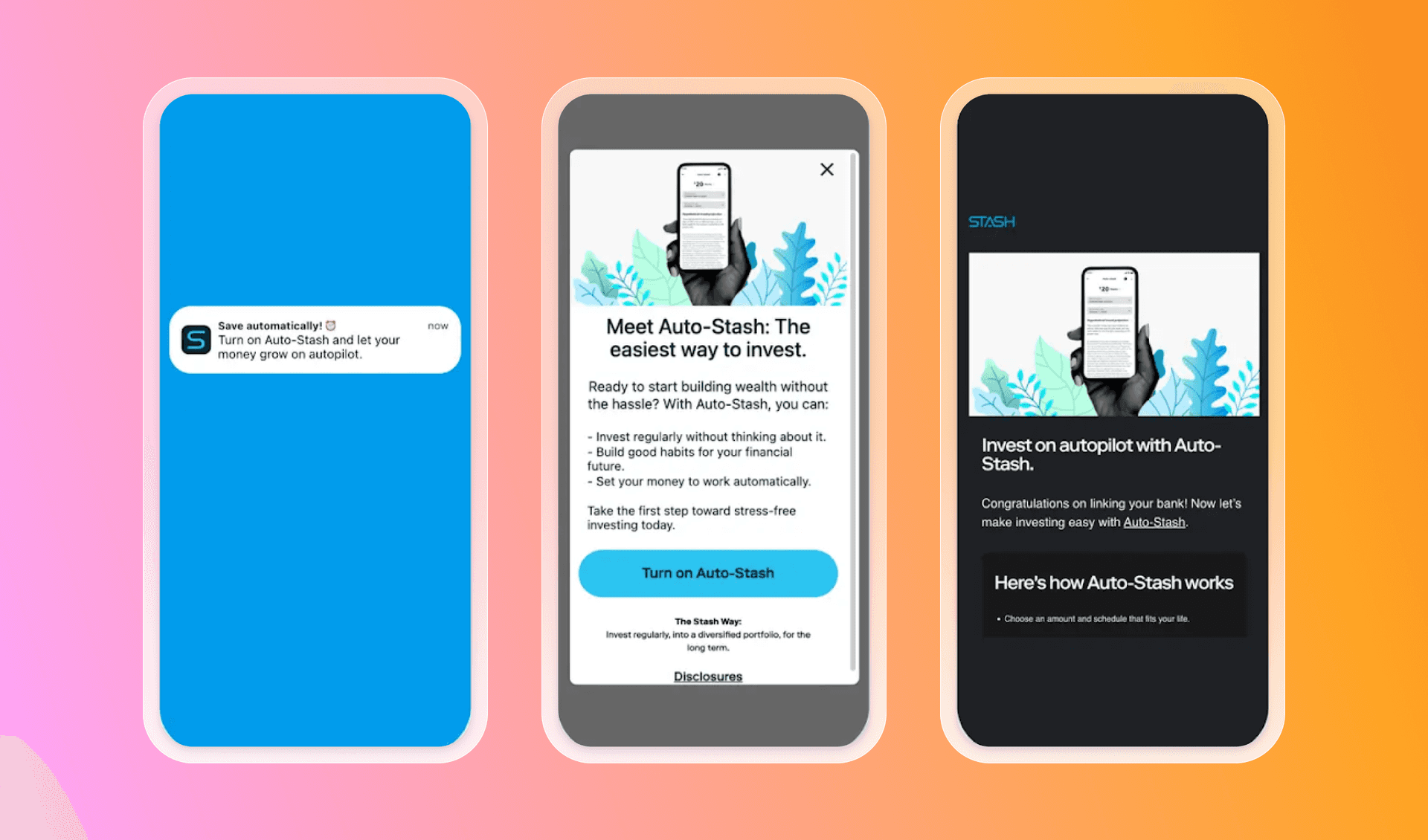
Stash built a multi-Canvas onboarding campaign in Braze that triggered different messaging flows based on exactly where a user dropped off—whether that was before SSN verification, after account linking, or before making a first deposit.
Messages across email, push, SMS, and in-app were personalized to each user's next step, with content tailored to address the specific concern or hesitation at that moment. Experiment Paths tested content variants before launch to make sure the right approach went out at scale.
The wins
- 72% increase in email open rate
- 64% increase in email click-through rate
- 20.34% FirstDeposit_Started conversion rate
- Nearly 60,000 new users started building wealth
KFC Spain turns its soggiest problem into its best-ever campaign
KFC Spain built its reputation on bold moves and great chicken. Their fries, however, were a different story—years of negative reviews, social media complaints, and disappointed customers had made them a liability.
The challenge
After reformulating the recipe, KFC Spain faced a harder problem than the fries themselves: how do you win back customers who've already told you, loudly and publicly, that you let them down? A standard promotional campaign announcing "new and improved" fries wasn't going to cut it.
The strategy
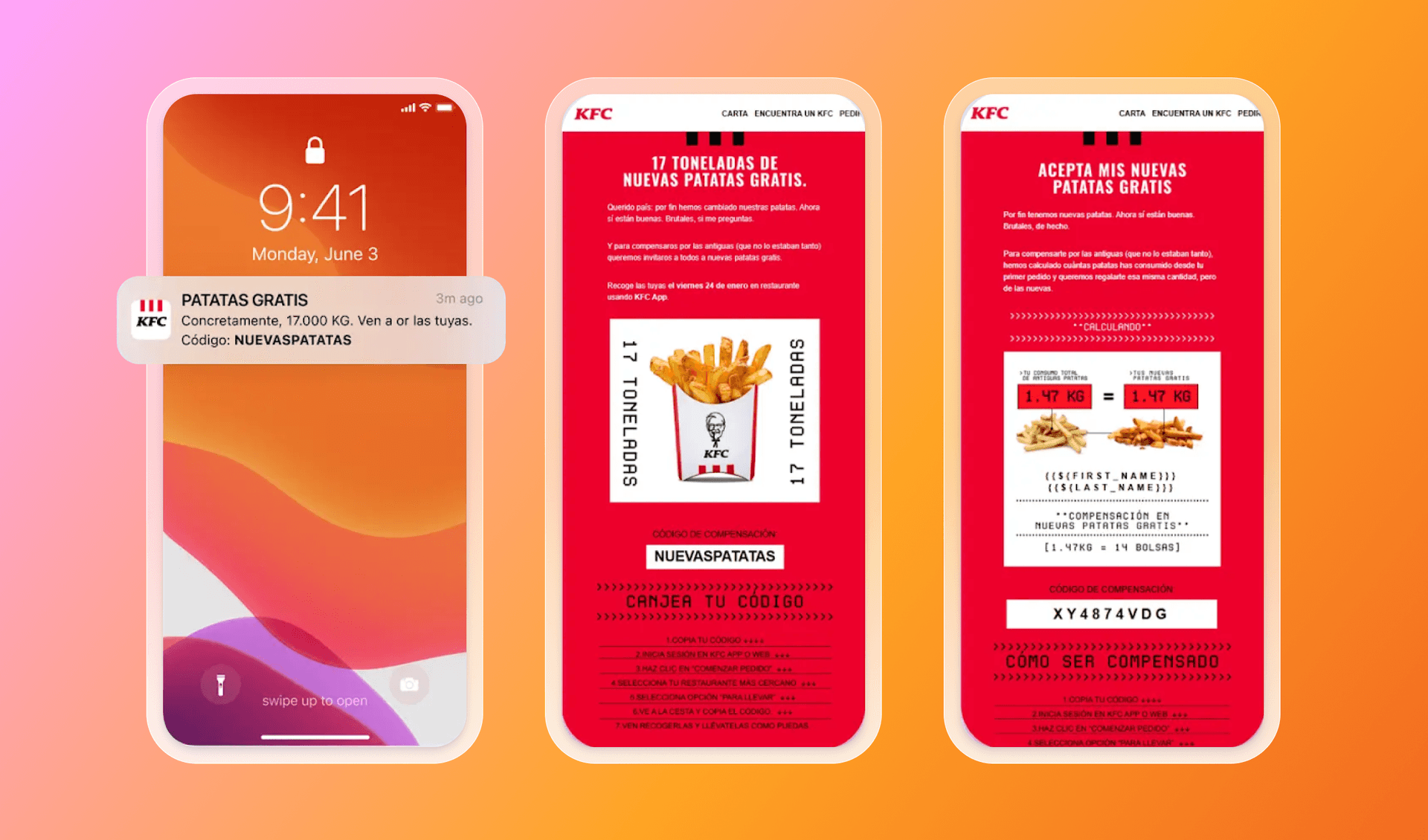
KFC Spain used years of CRM and purchase data to identify every customer who had ever ordered the old fries. Each one received a personalized message acknowledging exactly how many portions they'd endured—and compensating them with the same amount, on the house.
The campaign ran across email, push, and in-app, with automated reward distribution handling fulfillment at scale. KFC even replied to old Google Reviews publicly, inviting critics to come back and try the new recipe for free.
The wins
- 95% email open rate—KFC Spain's highest-ever CRM metric
- 679% increase in app downloads
- 20x increase in daily orders on launch day
- 42M impressions and 1.3M social interactions
- Highest-ever daily app sales, despite giving away 17 tons of fries
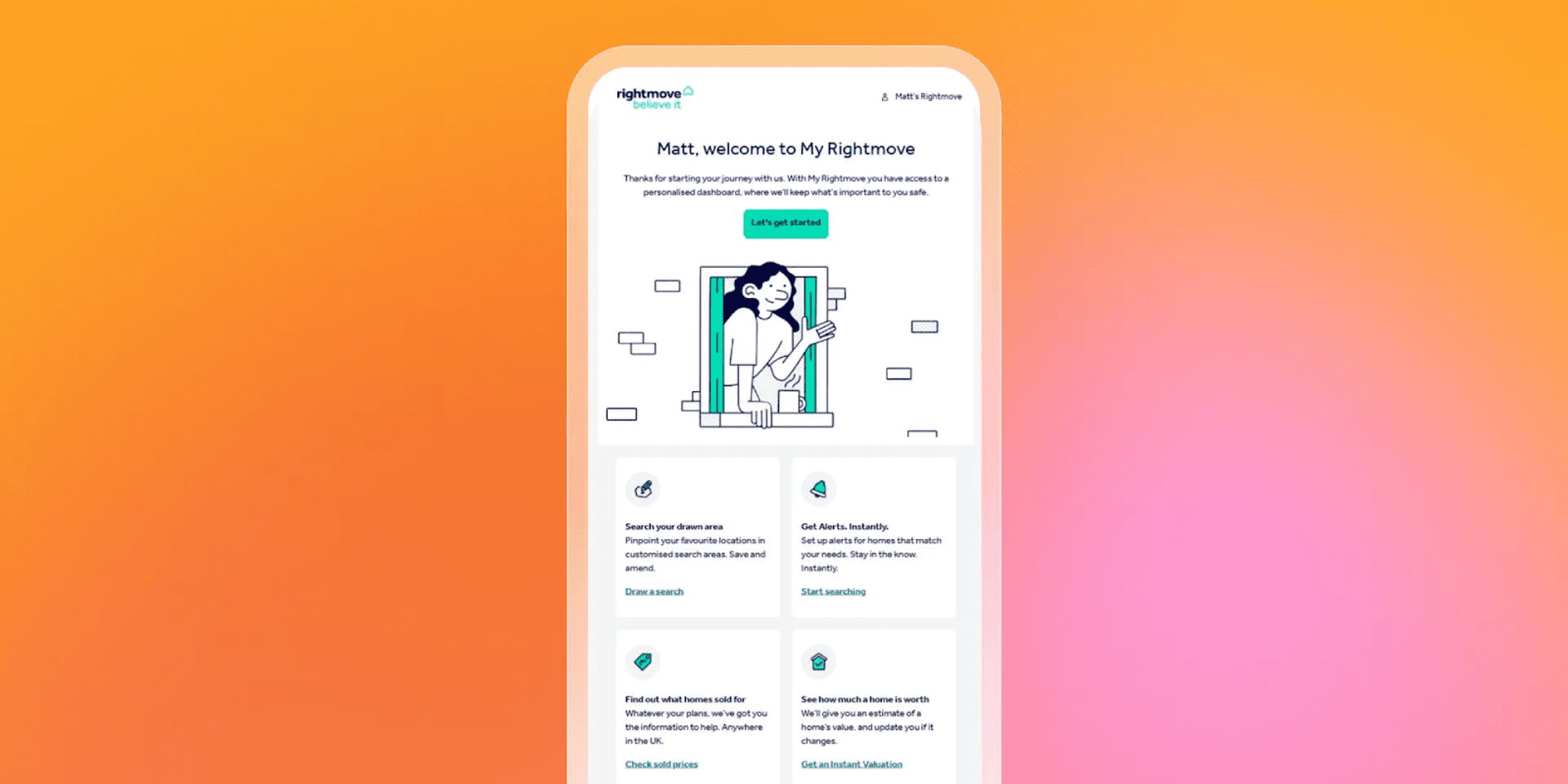
Rightmove finds the right address for six million emails a day
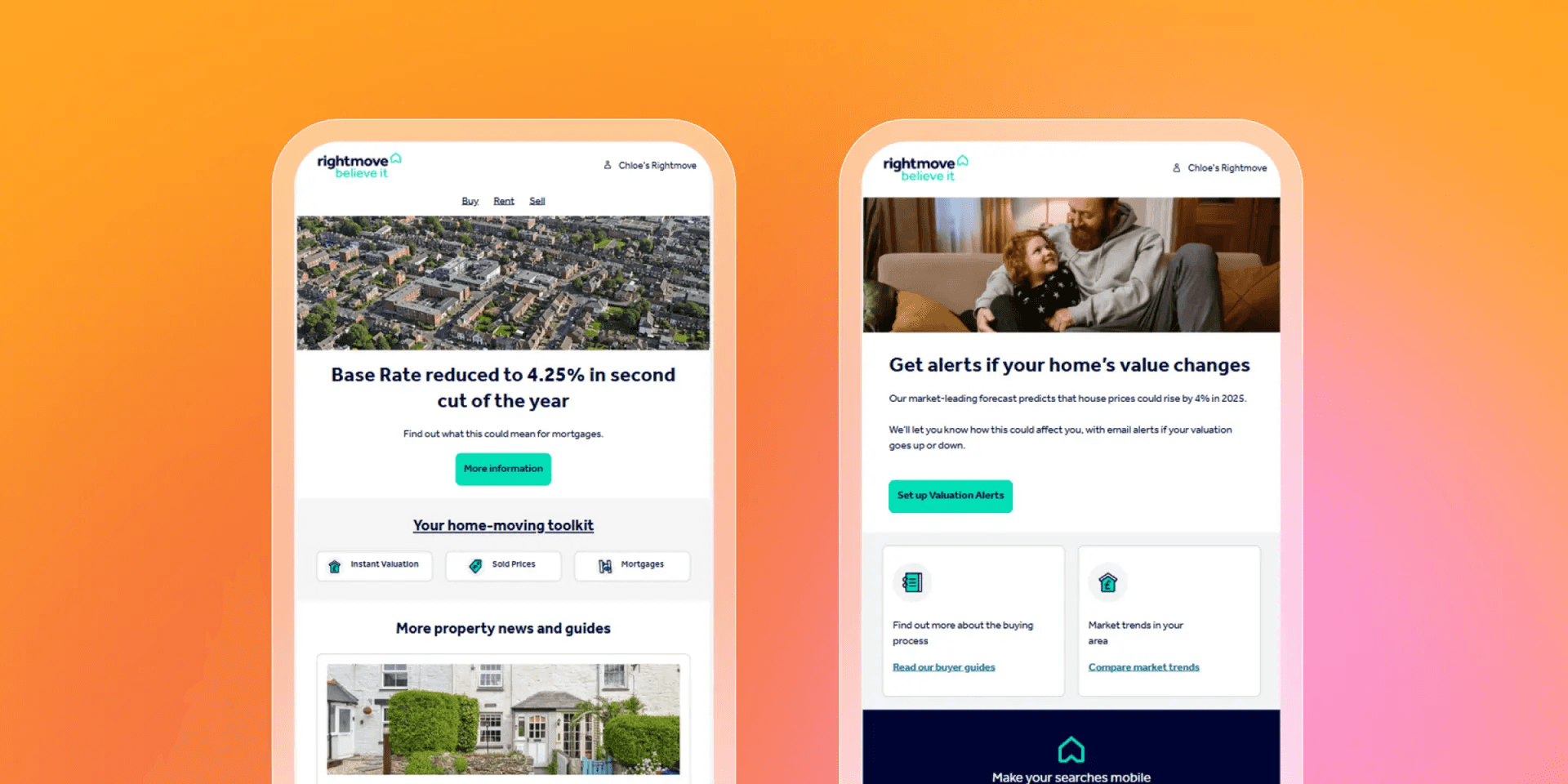
Rightmove is the UK's largest property platform, helping millions of buyers, sellers, and renters navigate one of the biggest decisions of their lives. Email is central to how they do it—with between two and six million emails going out every single day.
The challenge
Rightmove's previous provider was holding them back. Large sends were taking over four hours to complete, personalization at scale wasn't possible, and the team knew they were leaving relevance—and reach—on the table. They needed to migrate to a new platform, at full sending capacity, in under three months.
The strategy
Working with the Braze Email Deliverability Services team, Rightmove developed a phased migration plan built around strategic IP warming. They procured 11 new IP addresses, segmented their audiences by engagement level, and prioritized their most active users first to establish a strong sender reputation from the start. Daily reporting and continuous monitoring kept the process on track throughout.
The wins
- IP warming completed in under a month, ahead of schedule
- 99%+ delivery rate maintained throughout
- 50% reduction in bounce rates
- 10% uplift in click-through rate
- Send times dropped from 4+ hours to 30 minutes
AI email automation across the customer lifecycle
Email automation covers a lot of ground. Lifecycle emails that support a first-time customer look very different from those keeping a loyal one engaged—and both look different again from the ones trying to win someone back. Each lifecycle stage has its own dynamics, and automation works best when it's built to match them.
Onboarding
The moment someone signs up or makes a first purchase, they're at peak curiosity. Onboarding automation makes use of that by delivering timely, relevant guidance without requiring manual follow-up. Welcome emails introduce the brand and set expectations. Subsequent messages can respond to what the customer actually does—or doesn't do—rather than firing on a fixed schedule regardless of where they are in the process.
Activation
Activation is the bridge between first contact and genuine habit. For many brands, this is where engagement either takes root or stalls—and it's where automation can do some of its most valuable work. Triggered emails that respond to first-use behaviors, feature adoption signals, or early engagement patterns help move customers from "signed up" to "regularly using" without requiring constant manual oversight.
Getting customers to that moment of genuine value, quickly and personally, is what keeps them around.
Engagement
Once a customer is active, the job is keeping them engaged without overdoing it. Behavioral triggers—a streak, a milestone, a product interaction—create opportunities for real-time engagement that feels timely rather than intrusive. Cross-sell and upsell automation fits here too, responding to purchase signals and usage patterns to follow up with relevant offers grounded in what the customer actually did.
Retention and re-engagement
The further a customer moves from active engagement, the more important timing becomes. Retention automation responds to early signals of disengagement—a drop in session frequency, a lapse in purchases, a change in open rates—while there's still time to act.
Re-engagement campaigns address customers who've already gone quiet. AI decisioning adds real value here, determining the offer, channel, timing, and creative most likely to bring each individual back based on everything known about their past behavior—rather than sending every lapsing user the same reactivation email.
See how AI-powered decisioning improves email automation.
Related Tags
Be Absolutely Engaging.™
Sign up for regular updates from Braze.
Related Content
View the Blog
What is customer engagement? A complete guide for 2026

Madison Tiemtoré
What is email automation? How modern brands send smarter
Team Braze
Braze recognized as a strong performer in The Forrester Wave™ for Email Marketing Service Providers, Q1 2026