
Best AI marketing tools in 2026: A complete guide by category
Published on July 16, 2026/Last edited on July 16, 2026/16 min read
Team Braze
AI marketing tools are software applications that use machine learning, generative AI, reinforcement learning, or AI agents to automate, optimize, or personalize marketing decisions and execution.
The category now spans a range of standalone creative tools, optimization platforms, and full-suite enterprise engagement platforms. The best choice depends on what your goals are and what your team needs.
In this article we’ll run through the best AI marketing tools available today, with a special look at those for enterprise brands running cross-channel engagement programs at scale.
TL;DR
- AI marketing tools span three tiers: Standalone tools for specific tasks like content generation or send time optimization, platform-native AI built into existing marketing software, and enterprise suites that combine AI decisioning, cross-channel orchestration, and execution in one connected system.
- Leading standalone content and creative tools include Jasper, Copy.ai, Grammarly Business, Canva, and Zapier, each addressing a specific part of the content production workflow without requiring significant platform changes.
- Enterprise platforms including Braze, Salesforce Marketing Cloud, and Adobe Experience Cloud go beyond content and optimization to handle AI decisioning, full-workflow orchestration, and cross-channel execution simultaneously across millions of customer interactions.
- BrazeAI Decisioning Studio™ uses reinforcement learning to make 1:1 decisions optimized to any business KPI, and works across non-Braze platforms including Salesforce Marketing Cloud and Klaviyo as well as via flat file to any execution platform.
- Three verified case studies from Kayo Sports, 24S, and foodora show what AI-driven marketing programs produce in practice: A 105% cross-sell increase, 35% purchase conversion uplift, and 26% unsubscribe rate reduction respectively.
What are AI marketing tools?
AI marketing tools are software applications that use machine learning, generative AI, reinforcement learning, or AI agents to automate, optimize, or personalize marketing decisions and execution.
What do AI tools for marketing actually do?
The scope of what AI tools for marketing actually do varies enormously, from generating a single subject line to managing millions of simultaneous 1:1 decisions across channels and customer profiles. Some tools handle one specific task and do it well. Others sit across the entire marketing workflow, connecting data, decisions, and delivery into a single continuous program.
There are three tiers:
- Standalone AI marketing tools are single-purpose, built to handle one job—generating copy, optimizing email send times, or running A/B tests on message content.
- Platform AI sits inside existing marketing software as a built-in capability layer, applying intelligence across campaign scheduling, segmentation, and content creation within that platform.
- Enterprise AI marketing tools bring decisioning, orchestration, and execution together in one system, with AI working across the full customer lifecycle rather than at individual touchpoints.
Standalone tools solve one problem well, but platform-native AI has the advantage of compounding across the marketing workflow rather than accelerating a single step within it.
Best AI content and creative tools
The five tools below cover the most time-intensive parts of a content production workflow. AI content generation, maintaining brand voice across teams, and building campaign visuals at volume are tasks that manual approaches can't sustain at scale.
Jasper
Jasper is an AI copywriting platform built for marketing teams that need to produce content at volume. It generates blog posts, ad copy, email campaigns, and social posts from a short brief, and can be trained on a brand's existing content to keep outputs consistent in tone and style across formats and teams.
Best for: Marketing teams that need high-volume content generation across multiple formats.
Key AI capability: Brand voice training and LLM-powered content generation across marketing formats.
Copy.ai
Copy.ai is an AI writing assistant built around marketing templates. Rather than starting from a blank page, teams choose from pre-built structures for ads, product descriptions, email subject lines, and other common marketing formats, then prompt the AI to populate them based on their inputs.
Best for: Teams that need quick, template-driven marketing copy without the setup overhead of a broader content platform.
Key AI capability: Template-driven generative AI for marketing that produces format-specific copy from a short input prompt.
Grammarly Business
Grammarly Business applies an AI layer to everything a team writes, enforcing brand tone, style guidelines, and clarity standards across emails, proposals, social posts, and more. It works inside most tools teams already use, including Gmail, Slack, and Google Docs, keeping outputs consistent regardless of who is writing them.
Best for: Teams that need consistent brand voice enforced across all written content and communications at scale.
Key AI capability: AI-powered tone and style enforcement calibrated to a defined brand voice, applied in real time across platforms.
Canva
Canva AI 2.0, launched in April 2026, turns Canva into a conversational creative platform where teams can go from brief to finished, multi-format campaign assets in a single session. Brand Intelligence applies brand fonts, colors, and style to every output automatically, while Canva Grow lets teams generate ad variants from a website scan, publish directly to platforms including Meta, and track performance with AI-powered recommendations.
Best for: Marketing teams that need a visual-first creative platform for producing on-brand campaign assets across multiple formats, without a dedicated design team.
Key AI capability: Foundation model-powered design generation with built-in brand intelligence, AI-assisted copywriting, and integrated campaign performance tracking.
Zapier
Zapier connects over 8,500 marketing tools through automated workflows, and Zapier Agents let teams build custom AI assistants for specific content tasks using plain language instructions. That can mean routing copy for approval, syncing finished assets across platforms, or triggering handoffs between creative tools, with the AI making decisions rather than following a fixed set of rules.
Best for: Teams that want to build custom AI assistants for content workflows, or automate the connections between creative tools and the rest of the marketing stack without writing code.
Key AI capability: Autonomous AI agents configurable for specific content tasks across 8,500+ integrations, with natural language workflow setup via Zapier Copilot.
Creating and publishing content faster is a real advantage, but the decisioning, timing, and cross-channel orchestration that determines whether that content reaches the right person at the right moment is handled at the enterprise platform level, not the tool level.
Best AI analytics and optimization tools
Once content is in market, the next questions are whether it's working, why it’s working, and what to change. The four tools below focus on that side of the workflow—testing experiences, optimizing language, and reading the signals that tell you what's resonating and what isn't.
Optimizely
Optimizely is an AI-powered experimentation and personalization platform that covers A/B testing, feature flagging, content recommendations, and agentic content management. Its Agentic Experimentation capability continuously tests, personalizes, and optimizes digital experiences without requiring manual test setup at every stage. Trusted by 10,000+ brands including Nike, Zoom, and L'Oréal.
Best for: Product and marketing teams focused on web experimentation and conversion optimization.
Key AI capability: Agentic experimentation that continuously tests and optimizes digital experiences, with an Agent Platform that automates tasks and removes bottlenecks across the content and testing workflow.
Sprout Social
Sprout Social is an AI-powered social intelligence platform that turns real-time social signals into clear direction for marketing teams. Trellis, its AI agent, converts social conversation into actionable insight, helping teams understand what's driving spikes in engagement, what's worth acting on, and when to publish based on live audience signals rather than scheduled guesswork.
Best for: Social and brand teams that need to monitor, publish, and act on social signals in real time.
Key AI capability: AI-driven social listening and intelligence that identifies what's happening across social channels and recommends what to do next.
Persado
Persado is an AI platform that generates and tests emotionally targeted marketing language across campaigns, channels, and audiences. It identifies which emotional triggers drive response for specific customer segments and applies that learning across future messaging, moving copy decisions from instinct to evidence.
Best for: Enterprise marketing teams running high-volume campaigns that need to optimize message language for emotional resonance at scale.
Key AI capability: Emotion AI that analyzes language performance data and generates copy variants most likely to drive response for each audience.
Jacquard (formerly Phrasee)
Jacquard is an AI-powered language optimization platform that tests and refines subject lines, push copy, ad text, and email body copy across large send volumes. It learns continuously from performance data to improve future language recommendations, replacing the manual cycle of setting up, running, and analyzing A/B tests one at a time.
Best for: Teams running high-volume campaigns that need copy testing and optimization at scale without manual test management.
Key AI capability: Generative AI combined with continuous performance learning to optimize marketing language across channels and formats.
Best AI marketing platforms for SMB and mid-market
Standalone tools and specialized optimizers make sense when you have a stack already in place. For small and medium-sized businesses and mid-market teams building from a more central point, these four platforms bring AI into a more connected workflow, combining email, automation, customer relationship management (CRM), and campaign management in one place without the implementation weight of enterprise suites.
Braze
Customer engagement platform with BrazeAI™ built natively across decisioning, content generation, channel optimization, and prediction, all running on the same real-time data as campaign execution
Best for: SMB and mid-market teams with limited internal resources that are looking to grow and increase revenue.
Key AI capability: BrazeAI Decisioning Studio™ which uses reinforcement learning to make 1:1 decisions optimized to any business KPI, across Braze and non-Braze platforms; BrazeAI Operator™ that helps marketers swiftly answer engagement questions right in the platform; and BrazeAI Agent Console™ that allows them to swiftly spin up custom agents to automate and uplevel different aspects of the marketing process.
HubSpot
All-in-one CRM platform with Breeze AI built in across marketing, sales, and service, including autonomous agents for prospecting, content, and support.
Best for: SMB and mid-market teams wanting marketing, sales, and CRM in one platform.
Key AI capability: Breeze Agents and Copilot grounded in unified CRM data, with 100+ embedded AI features.
Mailchimp
Email and SMS marketing platform with AI copy generation, send time and day optimization, predictive segmentation, and a Creative Assistant that generates templates from brand assets.
Best for: Small businesses and early-stage teams focused primarily on email.
Key AI capability: AI-powered send time optimization and predictive segmentation via Intuit Assist.
Klaviyo
eCommerce-focused platform with a Marketing Agent that generates campaigns from a product page, plus predictive analytics for purchase timing, churn risk, and channel preference.
Best for: eCommerce and DTC brands running email and SMS.
Key AI capability: Marketing Agent for autonomous campaign generation with predictive purchase and churn analytics.
ActiveCampaign
Marketing automation and CRM platform with AI Campaign Builder, predictive sending, win probability scoring, and AI Performance Intelligence that benchmarks campaigns against sector data.
Best for: SMBs that need CRM plus marketing automation with AI that monitors and optimizes across the full lifecycle.
Key AI capability: Active Intelligence with predictive sending, sentiment analysis, and performance benchmarking across billions of signals.
Best enterprise AI marketing tools
Enterprise AI marketing platforms are built for running AI-driven decisions across millions of individual customer interactions simultaneously, orchestrating those decisions across multiple channels without manual intervention at every step, and connecting that work directly to revenue outcomes rather than top-of-funnel metrics.
Braze
Braze is a customer engagement platform with BrazeAI™ built natively into every layer of the platform. The full suite of AI capabilities, covering decisioning, content generation, channel optimization, and predictive forecasting, runs alongside campaign execution and draws on the same real-time customer data that powers every campaign.
BrazeAI Decisioning Studio™ applies AI decisioning via reinforcement learning to make 1:1 decisions that optimize any business key performance indicator (KPI), whether that's revenue, retention, engagement, or a custom metric, for each individual customer simultaneously. The decisioning agents autonomously experiment with combinations of channel, content, offer, timing, and frequency, learning from every customer interaction and continuously updating decisions. BrazeAI Decisioning Studio™ also is designed to work with other platforms, including Salesforce Marketing Cloud and Klaviyo, and can deliver decisions via flat file to any execution platform, making it available to teams regardless of their current marketing stack.
BrazeAI™ agents bring autonomous campaign execution to the platform. Via the Agent Console and the Operator, marketing teams can describe what they want to achieve, and AI agents build campaigns, generate segments, write HTML, and analyze results without requiring technical involvement at every step. Creative Studio handles generative content creation with built-in brand guidelines enforcement, Figma and Canva integrations, and real-time dynamic content, keeping every asset on-brand across all channels.
The Intelligence Suite applies per-individual optimization across timing (Intelligent Timing), channel selection (Intelligent Channel), and message variant selection (Intelligent Selection). The Predictive Suite adds churn forecasting and event prediction, so teams can act on risk signals before customers disengage. All of this sits within a single system built for AI personalization at scale and cross-channel engagement across email, push, SMS, in-app messaging, WhatsApp, and more, with the full BrazeAI™ product suite accessible from one place.
Best for: Enterprise and growth-stage brands running cross-channel engagement programs that need AI decisioning, orchestration, and native execution in one connected system.
Key AI capability: BrazeAI Decisioning Studio™, using reinforcement learning to make 1:1 decisions optimized to any business KPI, available across Braze and non-Braze execution platforms.
Salesforce Marketing Cloud
Salesforce Marketing Cloud is an enterprise marketing platform built inside the Salesforce ecosystem. Einstein AI handles predictive scoring, send time optimization, and content recommendations across email and advertising channels. Agentforce extends this with AI agent capabilities for autonomous campaign and customer service workflows across the platform.
Best for: Large organizations with extensive IT resourcing and budgets to implement and maintain a multi-product, multi-edition Marketing Cloud footprint alongside Sales, Service, and Data Cloud.
Key AI capability: Einstein AI for predictive scoring and content optimization, with Agentforce providing autonomous AI agent capabilities across the Salesforce platform.
Adobe Experience Cloud
Adobe Experience Cloud is an enterprise marketing suite that brings together Adobe Journey Optimizer for cross-channel campaign orchestration, Real-Time Customer Data Platform (CDP) for unified customer profiles, and Sensei AI for intelligent decisioning and content recommendations. Its clearest differentiator is the native connection to Creative Cloud and Adobe Analytics, giving large enterprise teams a connected pipeline from creative production through to campaign delivery and performance measurement.
Best for: Large enterprises with complex content supply chains that need marketing tightly integrated with creative tools and analytics.
Key AI capability: Sensei AI across Journey Optimizer and Real-Time CDP, with native Creative Cloud integration for AI-assisted content production at enterprise scale.
Iterable
Iterable is a cross-channel marketing platform focused on lifecycle engagement, with AI-powered send time optimization, channel optimization, and predictive goals built into campaign workflows. Its AI capabilities are designed to be explainable, so teams can see the reasoning behind the platform's recommendations, which makes it a practical choice for growth-stage brands that want visibility into how AI is influencing their programs before fully automating them.
Best for: Growth-stage companies focused on lifecycle marketing across email, push, SMS, and in-app channels.
Key AI capability: Explainable AI-powered channel optimization and predictive goals, with transparent reasoning that shows why the platform is making specific recommendations.
MoEngage
MoEngage is a customer engagement platform built with Sherpa, its AI engine, powering automated audience segmentation, push amplification, and predictive analytics. Sherpa analyzes behavior patterns to identify which customers are at risk of disengaging, recommends the right time and channel to reach them, and identifies the content most likely to drive a response, particularly across push notification and in-app formats.
Best for: Mobile-first brands in emerging markets that need strong push notification and in-app messaging capabilities backed by AI-powered segmentation and predictive analytics.
Key AI capability: Sherpa AI for automated segmentation, predictive churn identification, and push amplification across mobile channels.
How to choose the best AI marketing software
Picking the right platform has nothing to do with who has the longest feature list. It comes down to your data, your channels, and what your team can actually operate.
Matching AI marketing solutions to the right tier
Start by asking what you need. Standalone tools like Jasper and Copy.ai are the right call when the job is producing more content, faster.
Specialized tools like Jacquard and Persado make sense when you have a platform already and want to sharpen a specific part of it, such as language optimization or send timing.
Enterprise platforms like Braze, Salesforce Marketing Cloud, and Adobe Experience Cloud are for when AI needs to make decisions, orchestrate across channels, and execute, not just assist.
Once that's decided, here's what to actually look at.
AI marketing tools in action: enterprise case studies
Most listicles about AI marketing tools are all claims and no evidence. These three case studies are verified results, each tied to a specific BrazeAI™ capability.
1. 24S adds AI to cart, checks out with 35% purchase conversion uplift
24S is LVMH's online luxury fashion retailer, founded in 2017, offering more than 60 premium brands to a global customer base. Delivering a personalized digital experience that mirrors luxury in-store service is central to the brand.
The challenge
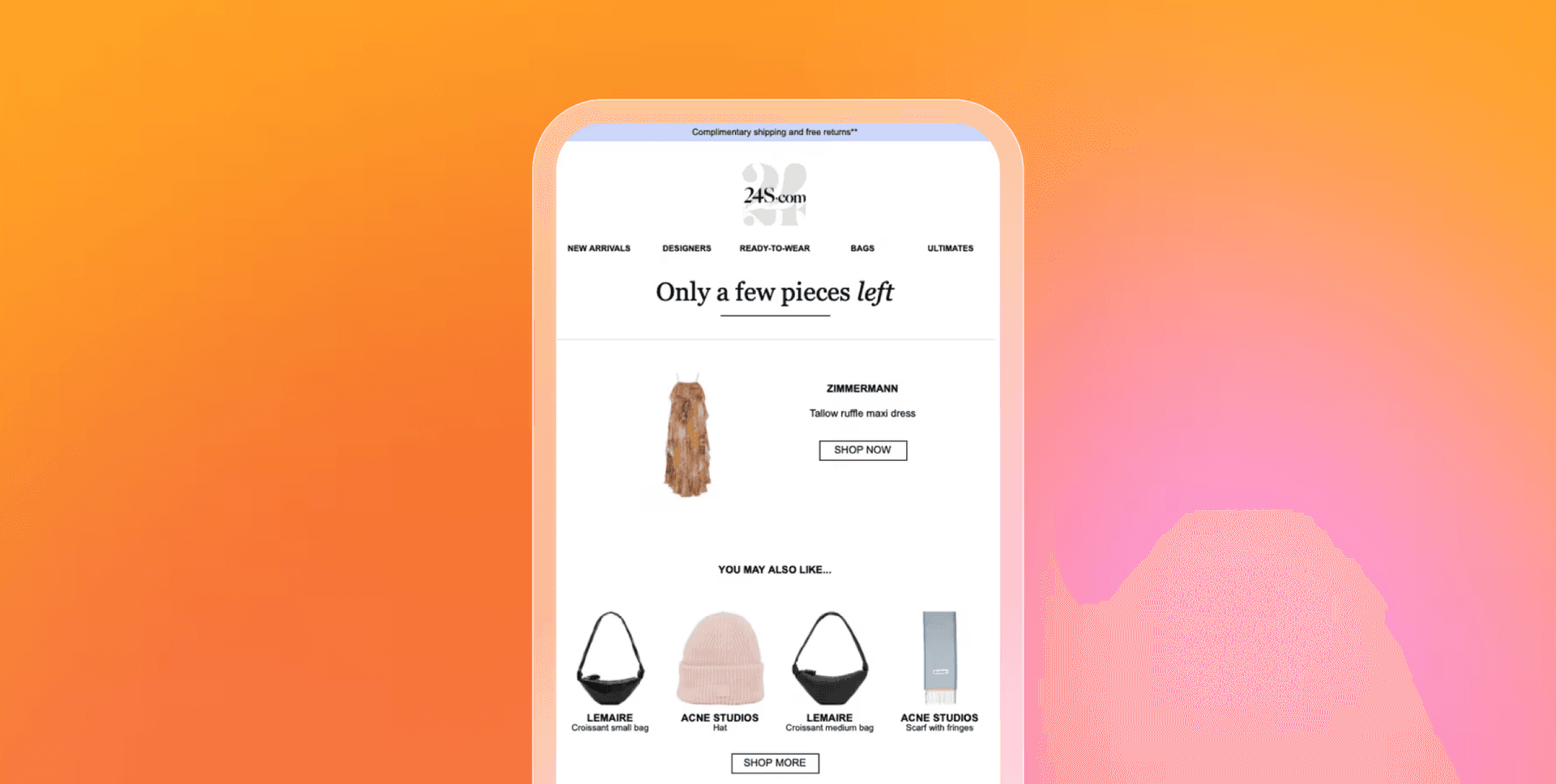
24S was running triggered emails, mobile messaging, and product recommendations across three separate platforms, creating fragmented customer experiences and unnecessary complexity for internal teams. They needed to increase purchase frequency and maximize first-purchase conversion without the operational overhead of managing disconnected systems.
The strategy
24S consolidated onto Braze and built eight personalized triggered campaigns targeting the moments that matter most. Their abandoned cart campaign used Braze Catalogs and Liquid operators to pull live stock data into messages, triggering urgency-based notifications when items in a customer's cart were running low. Their back-in-stock campaign used BrazeAI™ Item Recommendations to add four personalized product suggestions to each alert, keeping customers engaged while waiting for their original item to become available.
The results
- 35% increase in purchase conversion rate, measured over three days, from the abandoned cart campaign
- 7% increase in add to cart rate from the back-in-stock campaign
- Consolidated from three separate platforms into one
2. foodora nails the delivery window and cuts unsubscribes by 26%
foodora is a food delivery service operating across more than 700 cities in Europe. With a growing customer base and an onboarding flow designed to build habit early, getting message timing right for each individual was the team's primary focus.
The challenge
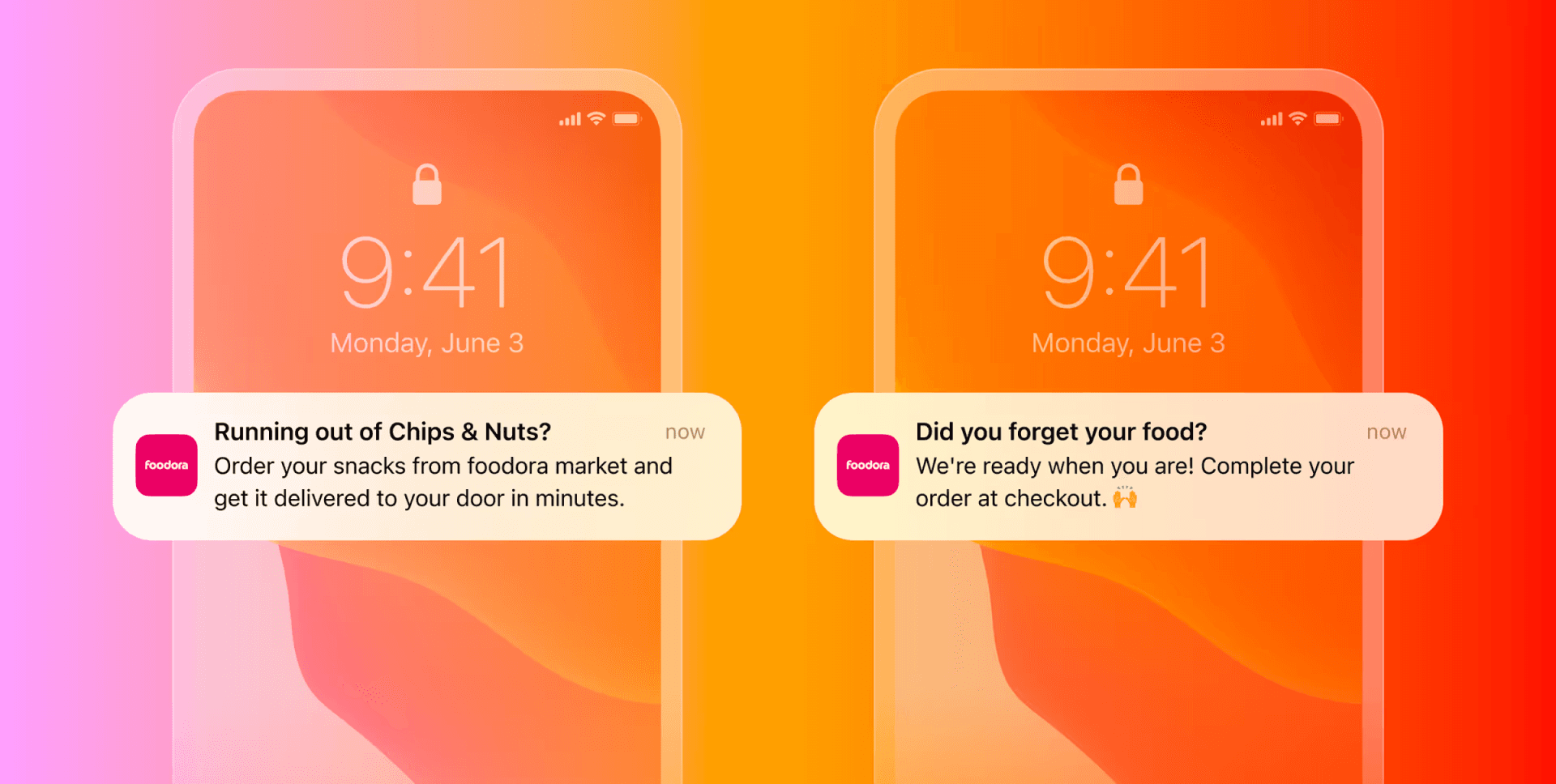
foodora's push notification and email programs were being sent at scheduled campaign times with no account for individual engagement patterns. Generic send times were limiting the impact of their onboarding campaigns and contributing to early disengagement from new customers.
The strategy
foodora implemented BrazeAI™ Intelligent Timing, starting with new customers in Austria during their onboarding flow. Rather than sending at a campaign-level scheduled time, Intelligent Timing analyzes each customer's historical engagement patterns and sends at the individual-level optimal moment. Based on the results in Austria, foodora expanded the approach to other regions and additional channels.
The results
- 41% conversion rate from messages sent
- 26% reduction in unsubscribe rate with Intelligent Timing
- 6% increase in push direct opens
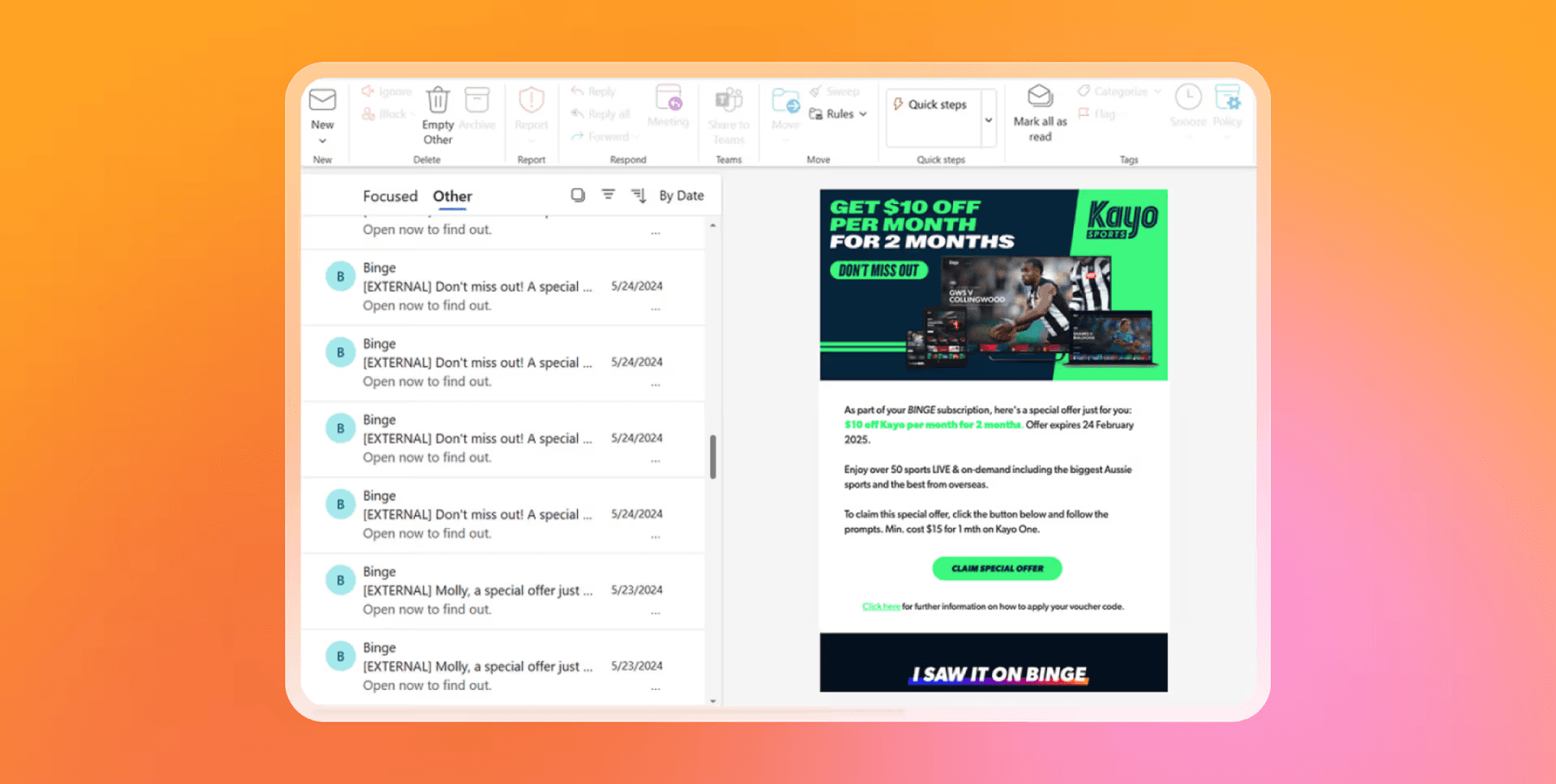
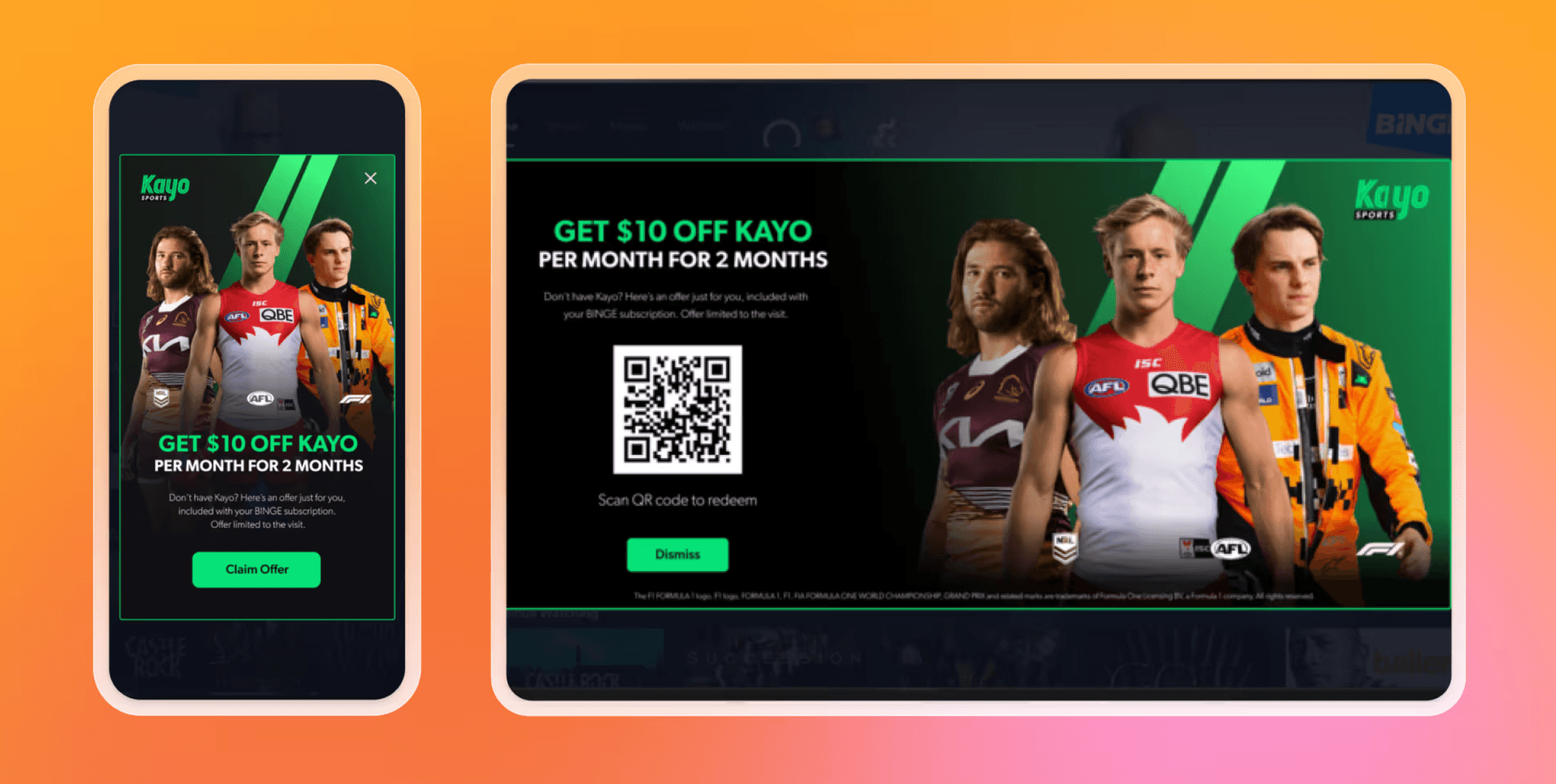
3. Full stream ahead: Kayo Sports scores 105% cross-sell increase with AI decisioning
Kayo Sports is Australia's largest sports streaming service, giving fans live and on-demand access to more than 50 sports. With a large and diverse subscriber base, the team needed a way to personalize engagement at a scale that rules-based campaign logic simply couldn't reach.
The challenge
Kayo Sports was running subscriber retention and cross-sell programs with around 300 message variants. That number couldn't reflect meaningful differences between individual subscribers, and with subscription prices rising, the pressure to demonstrate genuine value to each customer was growing.
The strategy
Kayo built Customer Cortex: A personalization engine powered by BrazeAI Decisioning Studio™, using 10 purpose-built reinforcement learning models across four channel-specific Braze Canvas journeys covering email, SMS, push notifications, and in-app messages. The decisioning agents autonomously experimented to find the optimal combination of message, channel, timing, and frequency for each individual subscriber.
The results
- 1.2 million personalized message variations, up from 300
- 14% increase in subscriptions in FY24
- 8% increase in average annual occupancy
- 105% increase in cross-selling to BINGE
- All achieved while average subscription prices increased by 20%
Related Tags
Be Absolutely Engaging.™
Sign up for regular updates from Braze.
Related Content
View the Blog
AI email marketing: How to use AI to run smarter email programs
Team Braze
Best AI marketing tools in 2026: A complete guide by category
Team Braze

AI personalized content: How to deliver the right message to every customer at scale